









TRACTOR TUNING & AGRICULTURAL ECU REMAPPING
Celtic Tuning develops specialist tractor tuning and agricultural ECU remapping software entirely in-house. Whether the goal is more power for demanding land work, better fuel efficiency to reduce running costs, or improved throttle response under heavy load, our software is developed to deliver meaningful, measurable results for working machinery.

WHY TRACTOR TUNINGMAKES COMMERCIAL SENSE
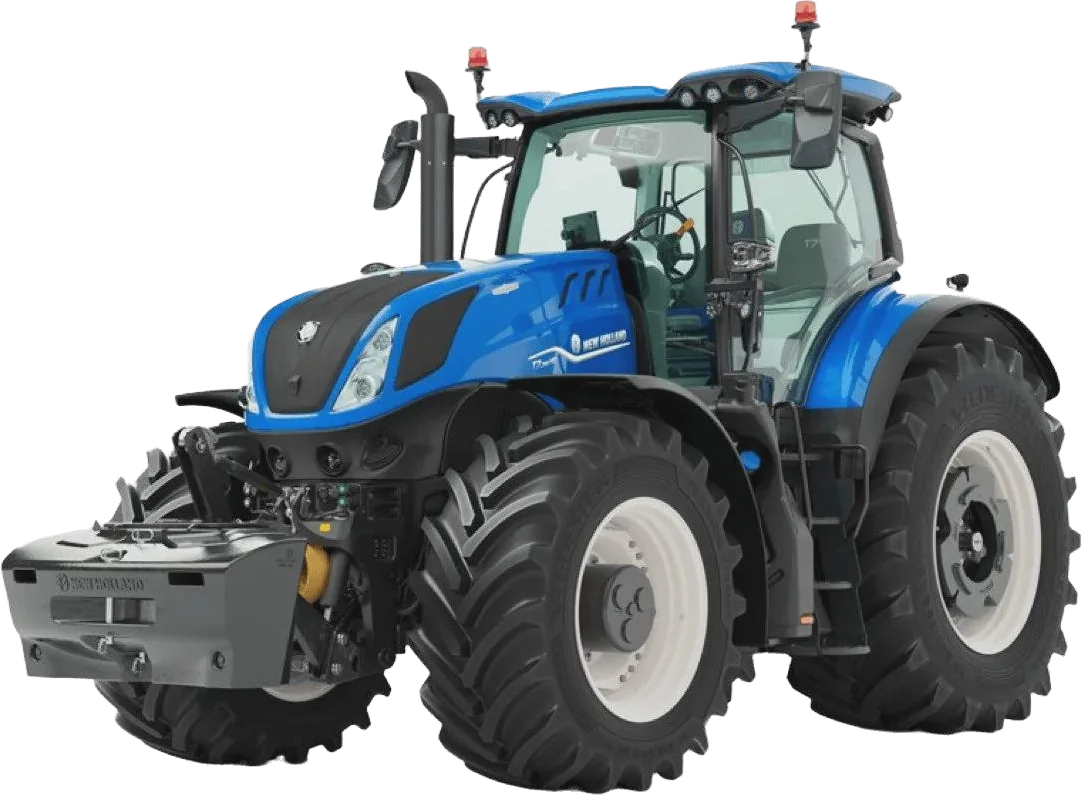
Agricultural machinery is subject to the same factory restrictions as road vehicles. Manufacturers produce tractors across a range of power tiers — often using the same engine platform across multiple models — with software-imposed limits separating one specification from another. A tractor rated at a lower horsepower figure may share its engine architecture with a more powerful variant in the same range, the difference between them being calibration rather than mechanical capability.
For farmers and agricultural operators, this matters practically. An underpowered tractor working at or beyond its effective limit places greater strain on the engine, uses more fuel to deliver the same output and is less responsive under load. A well-developed tractor remap addresses all of these issues — recovering the engine's available capability, improving efficiency and delivering power more effectively where it is needed.
Manufacturers build tractors on common platforms across their entire range. The difference in power between models is often software, not engineering. The capability is already there.
Modern tractor manufacturing has adopted the same common platform approach seen across the automotive industry. A single engine architecture underpins multiple models within a manufacturer's range, with power output differentiated through software rather than mechanical specification. The tractor is not incapable of more — it has simply been restricted to a lower output tier to protect the pricing structure of higher-specification models and the add-on packages dealers charge to unlock them. A tractor remap recovers that capability directly, without the need to go back to the main dealer.
The farms and operations Celtic Tuning works with report tangible differences in day-to-day use: better performance on steep gradients, more confident pulling under heavy loads, smoother power delivery during field work and, in many cases, a reduction in fuel consumption through improved engine efficiency. To give an indication of what is achievable, the figures are provided below.
Massey Ferguson MF5600 (85bhp) — Stage 1
Power (bhp)
Original
bhp
Modified
bhp
Difference
Torque (lb/ft)
Original
lb/ft
Modified
lb/ft
Difference
Massey Ferguson MF7400 (155bhp) — Stage 1
Power (bhp)
Original
bhp
Modified
bhp
Difference
Torque (lb/ft)
Original
lb/ft
Modified
lb/ft
Difference
These figures are provided as an indication of what Celtic Tuning software can achieve on agricultural machinery. Results will vary depending on the make, model, engine variant and condition of the machine. Contact us with your tractor's details for an honest assessment of what is achievable on your specific vehicle.
TRACTORS & COMBINE HARVESTERS— ALL MAJOR MANUFACTURERS
Celtic Tuning develops agricultural tuning software across tractors and combine harvesters from all major manufacturers. Coverage includes John Deere, New Holland, Case IH, Fendt, Massey Ferguson, Deutz-Fahr, Claas, Valtra and many more. If your machine is not listed, contact us directly — our coverage extends well beyond the most common makes and models.
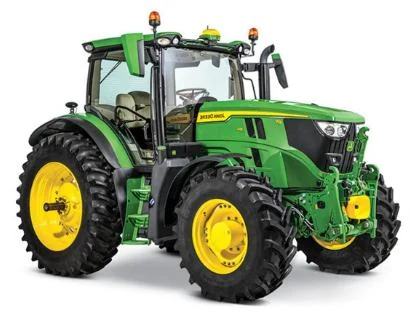
Tractor tuning
Our tractor tuning software is developed to improve power delivery, torque output and fuel efficiency across a wide range of tractor makes, models and engine variants. Whether the application is arable, livestock, groundworks or general farm use, the calibration is developed around the demands of working machinery — not optimised for a test environment.
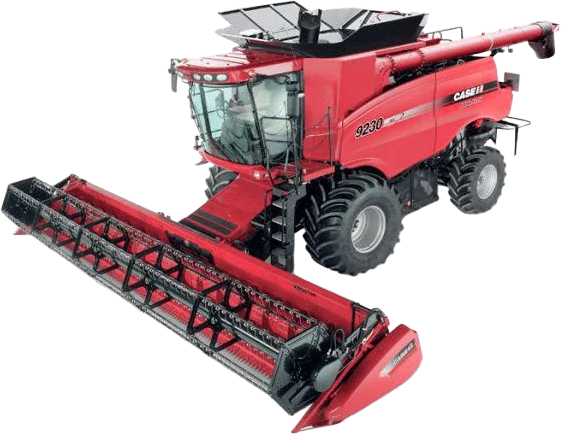
Combine harvester tuning
Combine harvesters operate under significant and sustained engine load during harvest. Combine harvester tuning focuses on ensuring the engine delivers power consistently and efficiently throughout extended working periods — improving throttle response under load and, where appropriate, recovering power that the factory calibration has suppressed.

All major tractor manufacturers covered - John Deere, New Holland, Case IH, Fendt, Massey Ferguson, Deutz-Fahr, Claas, Valtra and more

Combine harvester tuning available across leading manufacturers

Software developed entirely in-house - not purchased or adapted from third parties

Available via mobile service, direct to our Cornwall or Derby facility, or through our approved dealer network
HOW AGRICULTURAL ECUSARE READ
Agricultural ECUs are read using OBD and bench pin-out methods, depending on the machine and the level of access required. Unlike automotive applications, agricultural tuning does not involve rolling road development — the nature of the machinery and the way it is used make bench development the appropriate process for this category.
Every file is developed with the same in-house rigour applied to our automotive work. The ECU's control strategy is fully analysed before any calibration changes are made — understanding how the engine management system governs power delivery, fuelling and load response before adjusting any of those parameters.
HOW CELTIC TUNING AGRICULTURAL SOFTWARE IS DELIVERED
We understand that agricultural machinery is working machinery — time away from the field has a direct cost. Celtic Tuning offers tractor tuning and agricultural ECU remapping through three routes, giving operators the flexibility to choose what works for their situation.
Mobile service
Our mobile service brings the equipment to the farm. A Celtic Tuning technician attends the site and carries out the remap on location — no need to transport the machine or take it out of operation for longer than necessary.
Direct to our facility
Where more involved work is required, machines can be brought directly to our Cornwall or Derby facility. Both locations are equipped to handle agricultural ECU work.
Approved dealer network
Celtic Tuning operates an approved dealer network across the UK and internationally. Every dealer is assessed for technical capability before being granted access to our software. Agricultural tuning is available through selected network partners — contact us to confirm availability in your area.
OUR DEVELOPMENTPROCESS
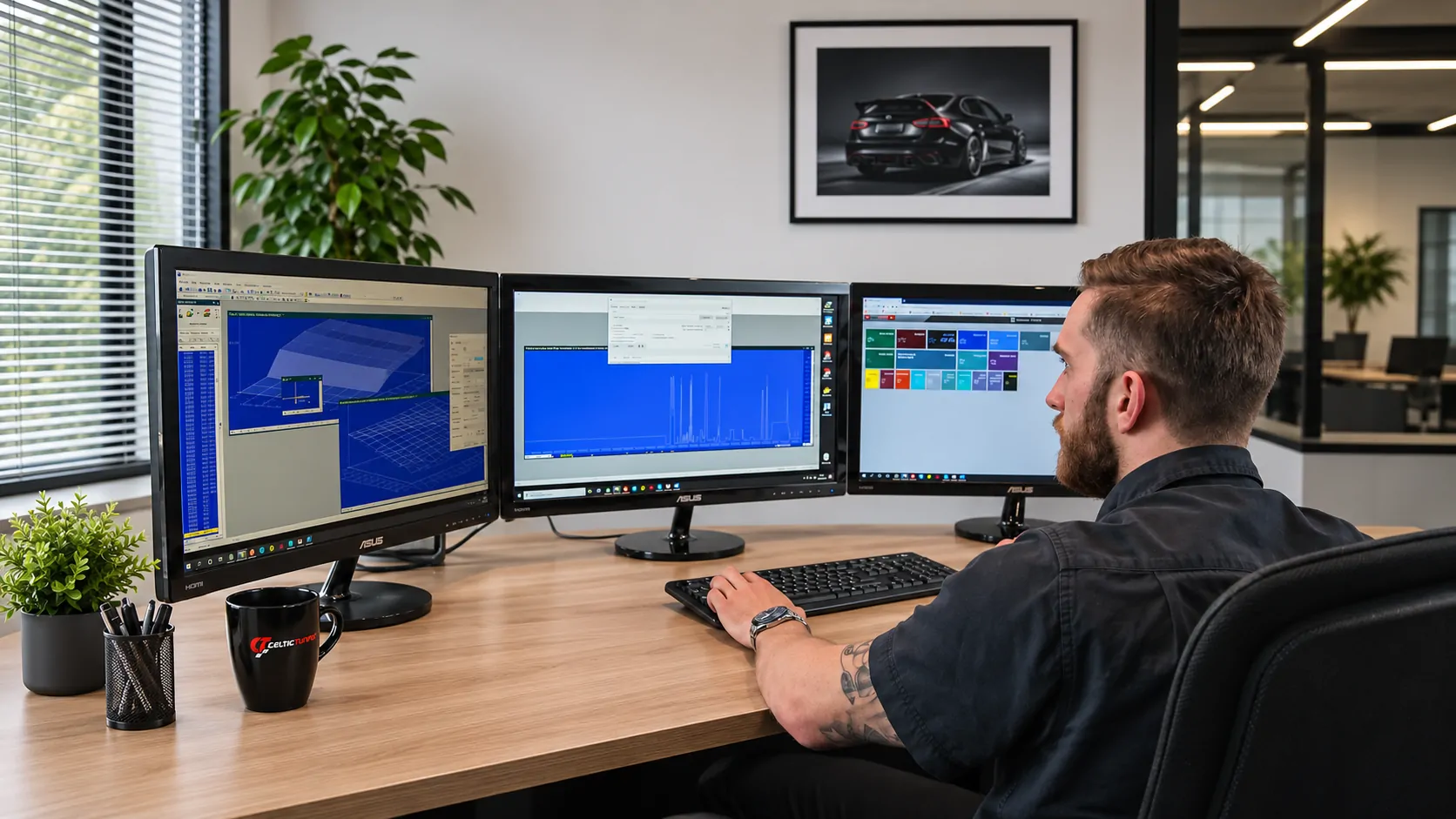
All agricultural ECU remapping software developed by Celtic Tuning is written entirely in-house. We do not purchase files, licence calibrations from third parties or use generic agricultural maps. Every file begins with a full read of the ECU and a thorough analysis of its control strategy — identifying where the factory has imposed restrictions and understanding the engine's actual mechanical capability before any calibration work begins.
Once the software has been developed, it is delivered to the vehicle via OBD or bench connection, depending on the ECU type. The same principle applies to agricultural software as to our automotive work — engine management systems are designed to deliver consistent behaviour across every machine of the same specification. Software developed to a high standard for a specific engine variant will perform consistently across other machines of that type, provided the machine is in sound mechanical condition. Should any machine respond differently, our ability to refine the calibration to that specific unit is always available.
FREQUENTLY ASKEDQUESTIONS
Tractor tuning — also referred to as agricultural ECU remapping — is the process of modifying the engine management software on a tractor or piece of agricultural machinery to improve power output, fuel efficiency and throttle response. Manufacturers apply software-imposed restrictions to their engines for a range of commercial and regulatory reasons. A tractor remap recalibrates those parameters to make better use of the engine's available capability.
When carried out correctly, tractor tuning does not damage the engine. Celtic Tuning develops all software in-house with a thorough understanding of the engine's control strategy and mechanical limits. Every machine is assessed before any work is carried out. The calibration is developed to work within the engine's safe operating parameters — the objective is to recover available capability, not to push machinery beyond what it can reliably sustain.
Results vary depending on the make, model, engine variant and condition of the machine, but the gains can be significant. As an example, Celtic Tuning's Stage 1 software on the Massey Ferguson MF5600 (85bhp) produced gains of +30bhp and +50 lb/ft of torque. On the larger MF7400 (155bhp), Stage 1 software delivered +60bhp and +120 lb/ft. These figures give a realistic indication of what is achievable — contact us with your machine's details, and we will give you an honest assessment for your specific tractor.
On many agricultural applications, yes. Improved torque delivery at lower engine speeds means less throttle input is required to sustain the same output, which can reduce fuel consumption — particularly during sustained field work. As with power gains, results vary by machine and application. We will never make specific fuel-saving claims, but improved efficiency is a commonly reported outcome from operators following a tractor remap.
Celtic Tuning covers all major agricultural manufacturers for tractor tuning and combine harvester tuning — including John Deere, New Holland, Case IH, Fendt, Massey Ferguson, Deutz-Fahr, Claas, Valtra and many more. If your make or model is not listed, contact us directly.
Agricultural ECUs are accessed via OBD or bench pin-out connection, depending on the machine. Tractor tuning is available through our mobile service — where a technician attends your farm — directly at our Cornwall or Derby facility, or through our approved dealer network. We will confirm the most appropriate method for your specific machine at the point of enquiry.
Yes. Celtic Tuning's mobile service is available for tractor tuning and agricultural ECU remapping — our technician attends the site with all necessary equipment, minimising downtime and removing the need to transport machinery.